|
|
Porting
Fonts Across Platforms:
Number 19A |
 |
|
|
|
|
|
|
Porting PC Type 1 Fonts To The Mac®
With Mac FontLab®
To find out more about FontLab and where to get
it, click
here
Click here
for legal note on fictitious font name used in this
tutorial
1. In this case we will convert the Type
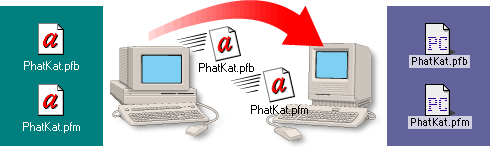
1 font, PhatKat. The font is comprised of two files
(more here
on why Type 1 fonts require two files). There is
a .PFB file which contains the outlines and a .PFM file
which contains the metrics. Copy these files to the
Macintosh® computer either
by using a PC-formatted disk or by sending it over a
network (more
here on copying files between Mac and PC).
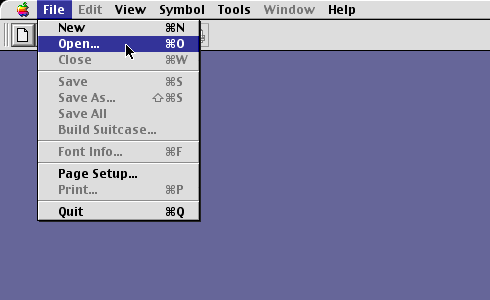
2. Press the  button on the Standard Toolbar or click File >
Open... to open the font. Navigate to the .PFB file
(containing the font outlines) and open the file.
button on the Standard Toolbar or click File >
Open... to open the font. Navigate to the .PFB file
(containing the font outlines) and open the file.
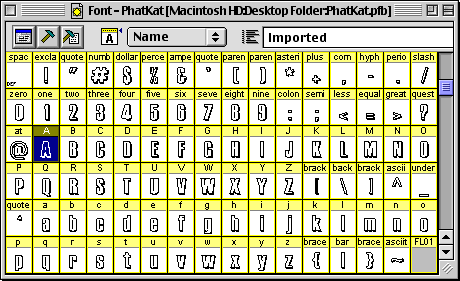
3. You will see a view of the individual
characters in the font window. The default encoding
for imported fonts is "Imported". We need
to change the encoding.
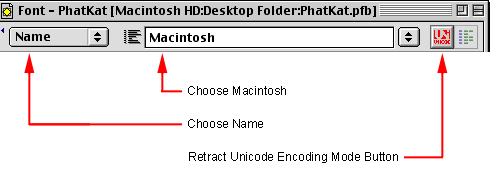
4. Select the encoding options from the
toolbar on the font window. In FontLab there are two
encoding modes - Names encoding mode and Unicode encoding
mode. We want to put FontLab into Names encoding mode
because the converted font will be PostScript®
Type 1. The Unicode encoding mode button must be retracted
to be in names encoding mode (shown below). We also
want to select Macintosh encoding from the drop-down
list of available encoding tables. Perform the following
steps shown in the diagram below. For a more complete
explanation of encoding and why it is important, click
here.
Click Here To Continue...
|

